Categories
General

Best Neighborhoods in New Jersey for Families

New Jersey is an excellent place for people of all ages to live and work. Its close proximity to both New York City and Philadelphia means you have access to two amazing cities. Of course, you don’t even have to leave New Jersey to experience a bustling city or a quiet countryside. There are plenty of wonderful places to visit and live. With that said, if you’re raising a family (or plan to), you might have different requirements than a young, single professional. Luckily, there are plenty of amazing family-friendly neighborhoods in New Jersey.

New Jersey might be one of the smallest states, but it is one of the largest in terms of population, and that’s because it has a lot to offer. So if you’re considering a move, read below for some of the best neighborhoods in New Jersey for families.

Madison: One of the Best Places in New Jersey

Located about 25 miles west of downtown Manhattan, Madison is considered one of the best places to live in New Jersey. While it might be close to New York City, the city itself offers a more suburban feel, and the majority of residents are homeowners. While you might not get that bustling city vibe of Jersey City or Newark, the downtown area is super cute and offers plenty of shops and restaurants to keep you busy. It also offers everything you expect when moving to the suburbs, such as yards, neighborhood barbecues, a farmer’s market, bike paths, and a commuter-rail station.

Of course, that’s not all it offers. Madison also has a relatively low crime rate, with the majority related to property crime. Thanks to the close-knit community and civic-minded

people, Madison is able to keep its ranking as one of the safest areas in New Jersey and even the United States.

Perhaps one of the biggest reasons why many families move to Madison is because of the school system. There are a total of three public elementary schools, one middle school, and one high school within Madison’s school district. It is also home to two colleges: Drew University and Fairleigh Dickinson University. So if you really want to save on college expenses, your child can get a great education from kindergarten up to their PhD. Surprisingly, Madison also has a relatively low tax rate when factoring in the great educational system, low crime rate, and general amenities.

As you might expect, houses are in high demand. The average home price in Madison is close to $700,000, with some going for as much as $1 million. With everything Madison has to offer, it’s no surprise that houses are flying off the market. If you’re not sure you want to live in Madison permanently, you can rent an apartment for around $1700.

New Providence: The Perfect Place to Raise Kids

Situated between the two ridges of the Watchung Mountains, New Providence is a quaint town that is only 28 miles west of New York and has two nearby train stations and weekday buses for easy access to NYC. If you don’t want to deal with public transportation, you can always opt for a car, as the area offers easy access to the New Jersey Turnpike.

New Providence has a ton of character and charm. The area is home to more than 13,000 people and consistently ranks as one of the best neighborhoods in New Jersey. This small 3.65 square mile borough is home to more than 13,000 people and growing. The charming downtown offers plenty of amenities, including the cute Salt Box Museum that is home to a number of artifacts and memorabilia dating back to before the American Revolution.


Moving Cost Estimates by NJ Town (Family Homes)

NJ Town Avg Local Move Cost ($) Avg Home Size (sq ft) Estimated Moving Hours Packing Cost ($) Total Estimated Moving Budget ($)
Madison 1,400 – 1,900 2,200 6 – 8 600 – 900 2,000 – 2,800
New Providence 1,300 – 1,800 2,100 6 – 7 550 – 850 1,900 – 2,600
Livingston Township 1,600 – 2,200 2,600 7 – 9 700 – 1,000 2,300 – 3,200
Glen Rock 1,400 – 2,000 2,300 6 – 8 600 – 950 2,000 – 2,900
Summit 1,800 – 2,500 2,800 8 – 10 800 – 1,200 2,700 – 3,700


Besides its quaint charm, New Providence is also incredibly safe, with only a handful of property crimes that happen each year. When compared to the national average, New Providence consistently ranks as one of the safest areas in the country.

If you’re looking to raise kids, New Providence is a great place to move. It is home to several highly-rated public schools serving pre-k through 12th grade. There are a total of 2 elementary schools, one middle school, and one high school. Classroom sizes are small with a 13-to-1 student-to-teacher ratio. It’s no wonder that households with children make up around 40 percent of the town’s population.

For those who want to move here, make sure you have a good income. The median home value is around $607,000. While the majority of residents do own their homes, keep in mind that the median household income is around $145,000. There are rentals, but you’ll end up paying around $1,700 for a one-bedroom.

Livingston Township: One of the Safest Places to Live

Located in Essex County, Livingston has long been considered one of the best places to live in NJ, whether you’re raising a family! With a population of around 31,000, this is by no means a small town. Yet despite the population, it is considered one of the safest places to live, with crime numbers well below the national average for both violent and property crimes.

While mainly considered a bedroom town, it’s only about 40-45 minutes by car from NYC, Livingston offers a fairly large downtown area with plenty of shops, restaurants, and other amenities. If you can’t find something you want downtown, there’s always Livingston Mall!

As you might expect, Livingston has an amazing school system. In fact, it is ranked in the top 10 locations with the best public schools in the entire state. There are several top-ranked public schools available and a variety of private schools that provide education from elementary to high school. Whatever option you choose, you can rest assured that your child will be getting a great education that will prepare them for college and/or the workforce.

If you’re interested in moving your family to Livingston, NJ, you’ll want to save up a lot of money. While most residents are homeowners, the cost of houses has skyrocketed,d and you can expect to pay at least $500,000 for a house. While definitely on the higher end, if you want to live in a quiet location that’s still close to NYC and offers amazing schools, then you should brace yourself for high home prices.

Glen Rock: Major City in New Jersey

Living in a major city like New York or San Francisco might be exciting because there’s always something to do, but it can get a bit lonely since everyone is so focused on their own life. If you’re yearning for a community, look no further than Glen Rock. This small borough is home to around 12,000 people and really emphasizes that tight-knit vibe. The community looks out for one another, and the residents are very friendly and helpful. Plus, households with children make up almost 50 percent of the population, so your kids and you will definitely be able to make some friends.

Glen Rock is consistently praised for its outstanding schools, with a total of four public elementary schools, one middle school, and one high school, and, of course, a few private schools. School class sizes tend to be small, which means every child gets the attention they need in order to succeed. In addition to a great school system, the town boasts the Thielke Arboretum, an education center that invites authors to talk about their books to the residents.

Like the other towns, Glen Rock is also very safe, with crime rates well below the national average. Residents really look out for each other and go out of their way to be helpful. The community is very active, and there are plenty of events that bring together the entire town, thus curtailing a lot of crime. Of course, that doesn’t mean it’s crime-free. Most of the crime tends to fall into property crime, and there is very little violent crime that happens in the area.

As a small town, you shouldn’t expect big city amenities. However, there are a few restaurants and shopping areas in the downtown area. If you can’t find what you need, you can generally drive 10-20 minutes away. Making the trip to NYC will take a little over an hour by train or car, so you might want to factor this into your calculations, especially if you plan on commuting to NYC.


Overall Family Living Score (Composite Index)

NJ Town Safety Score
(1–10)
School Quality
(1–10)
Affordability
(1–10)
Commute Convenience
(1–10)
Family Lifestyle
(1–10)
Total Family Score
(Out of 50)
Madison 9.5 9.6 7.2 8.5 9.0 43.8
New Providence 9.7 9.4 7.5 8.3 9.2 44.1
Livingston Township 9.3 9.8 6.8 8.7 9.1 43.7
Glen Rock 9.2 9.5 7.0 7.8 9.4 42.9
Summit 9.4 9.9 6.2 8.6 9.6 43.7

Becoming a homeowner in this area doesn’t come cheap. The median home value hovers around $650,000, though the majority of residents do own their homes. You might be able to find a deal in this amazing NJ neighborhood, so long as you are patient.

Summit: the Most Expensive City to Live in New Jersey

Nestled within the Raritan Valley and Rahway Valley regions, Summit is home to around 22,000 residents. Originally incorporated as Summit Township back in 1869, it became its own city in 1899. This is a perfect spot for families who love the outdoors, as it is next to the Great Swamp National Wildlife Refuge, Hidden Valley Park, and Briant Park. Located around 24 miles from New York City, you can easily have the best of suburban living and city living.

Summit has consistently been called one of the best cities to live in New Jersey, and for good reason. It offers an eclectic collection of parks, recreational facilities, delicious restaurants, and unique shops. It’s also home to the Visual Arts Center of New Jersey, which is the largest institution in the state dedicated to contemporary art. If you are more into theater, you can visit the Summit Playhouse, one of the oldest community theaters in the United States. It offers up to three plays a year, including a children’s program. If you want to get your kids away from the computer screen, there are plenty of family-friendly activities at the Reeves-Reed Arboretum.

When it comes to schools, Summit gets an A on its report card. They have five public elementary schools, one middle school, and one high school in the district. Students and parents rate schools highly in every department, from academics to clubs and activities to college preparation. It boasts a 98 percent graduation rate and is ranked in the top ten best school systems in New Jersey.

Despite its larger size, Summit still remains very safe with very few incidences of violent and property crimes. Residents are very vigilant and more than happy to lend a helping hand to those in need.

If you want to live in Summit, you should be prepared to pay the price. Housing is extremely expensive as the median home value hovers close to $900,000. Taxes are also quite high, but in return, you get amazing schools, a safe neighborhood, and wonderful family-oriented amenities.

Hire the Best Professional NJ Movers

There are dozens of other amazing cities and towns in New Jersey, but these four locations consistently rank as the best family-friendly neighborhoods in New Jersey. If you’re looking to make the move, make sure to hire a professional moving company like NJ Great Movers. We’ll be able to help get your belongings quickly and easily from your old place to your new home in a matter of hours. Whether you’re moving to Summit or Madison, we’ve got you covered.

Categories
Moving Tips

Moving Terminology You Should Know

As with most industries, professional movers use certain terminology to refer to specific types of services, charges, and fees. Understanding these moving terms can help you better understand your quote and final bill. Plus, it can save you money in the long run as you may end up paying more for your move than you expected or getting a service that you don’t want.

Below is some typical moving terminology you might hear or find on your quote and/or final bill. If there are terms your movers use that you don’t understand, don’t be afraid to stop and ask. The more knowledge and understanding you have about the process, the better.

Frequently Used Moving Terms

Accessorial Services – these are additional services provided by professional movers that are not part of standard service. This could include bulky article moving, stair fees, etc.

Actual Charges – The final cost of the move from start to finish, including all additional fees.

Advanced Charges – These charges are for moving services that the moving company does not perform, but are performed by a professional, craftsman, or a third party at your request. A good example of this is disassembling a custom-made closet or Murphy bed. You could ask the movers to bring on a professional to do this if they do not provide this service. The charges will be paid by the mover and added to your invoice.

Appliance Service – the preparation of major appliances such as stoves, refrigerators, etc., to make them safe for transport

Arrival Window – the set hours or dates when your movers will arrive at your pick-up location. This is normally a 2-hour window where the movers will plan to arrive at your location to start the move.

Assembly and Disassembly – taking apart furniture before loading it onto a truck and putting it back together at the destination.

Bill of Lading – A legally binding document that outlines all the details of the move from the moving date to the items loaded onto the truck. The receipt for your goods and the final contract for their transportation. This also serves as a receipt of your agreement with the moving company.

Binding/Non-Binding Estimate – Before you choose your movers, you should always get an estimate on the cost of the move. In general, you want to go with movers that provide a binding estimate, as this guarantees the total cost of the move based on the quantities and services shown on the estimate. A non-binding estimate provides a general estimate of the final cos,t including accessorial services, but the final bill can change based on the actual time/weight of your belongings. This means you could end up spending more money than you initially expected.

Bulky Article – Some moving companies will charge you extra for large items such as pianos, pool tables, big-screen TVs, and more.

Booking Agent – The person who accepts the order for the move and schedules the moving crew and truck for the move.

Cancellation Conditions – This policy governs the conditions and timing in which customers can cancel their booking without incurring any costs. Most moving companies (including NJ Great Movers) provide clear guidelines as to how much notice is required for cancellation.

Carrier – another word for moving company

Cash on Delivery (COD) – When you agree to pay upon delivery of your items to the destination.


Common Moving Fees Explained (With Typical Cost Ranges)

Fee Type When It Applies Typical Cost Range ($) Frequency of Use (%) Can Be Avoided?
Accessorial Services Extra services not included in standard moving packages $50 – $300+ 75% Sometimes
Flight (Stair) Charge Items carried up or down stairs without an elevator $25 – $75 per flight 60% Sometimes
Long Carry Fee Truck cannot park close to entrance $75 – $250 45% Rarely
Bulky Article Fee Large or heavy items (piano, pool table, safe) $150 – $600+ 30% No
Packing Services Movers pack some or all household items $200 – $1,500+ 50% Yes
Packing Supplies Boxes, tape, paper, blankets, stretch wrap $50 – $400 65% Yes
Assembly / Disassembly Furniture taken apart and reassembled $50 – $300 70% Sometimes
Appliance Service Disconnecting or reconnecting appliances $75 – $200 40% Yes
Storage-In-Transit (SIT) Temporary storage between move dates $150 – $500/month 20% Sometimes
Expedited Delivery Guaranteed delivery by a specific date $300 – $2,000+ 15% Yes
Travel Time Charge Time spent driving to and from job site $50 – $200 80% Rarely


Certificate of Insurance (COI) – a form that confirms your moving company has an insurance policy that covers liability and loss up to the insurance limits required by a building. For many apartment buildings, these forms are required in order to move into the building. Your moving company will be the one to supply this certificate directly to building management or the building super.

Claim – An insurance claim filed for loss, damage, or delay or delivery of your belongings during any stage of the move or storage.

Contactless Move – With the advent of COVID-19, contactless moves have become the norm. These moves enable a customer not to be in attendance the day of the move. This option does negate some liability options.

Delivery Window – This sets the hours and/or dates when the movers will arrive with your belongings at the destination. These dates will be listed on the Bill of Lading and Order for Service, so make sure to double-check both these documents.

Expedited Service – an agreement with the mover to transport your belongings by a set date in exchange for additional charges.

Fixed Rate – a fixed rate is an upfront price based on the information you provide during the initial quote. NJ Great Movers’ customer service team has a 99 percent accuracy rate on our estimates, so long as you provide all the necessary details and services you want to include.

Flight Charge – an extra charge for carrying up and down flights of stairs.

Full Service – If you opt for this service, the movers will take care of every aspect of the move, including packing everything up, disassembling and assembling all the furniture, and, of course, getting your items to their destination. This service will cost more money than if you pack yourself, but it’s great for people who don’t have the time or ability to do it themselves.

Full Value Protection Insurance – an insurance policy that covers the current market value of an item, an item’s replacement, or the cost of repair if it’s damaged or lost. You generally need to go through a third-party insurance company to get this protection. This is worth the cost if you happen to have a lot of high-value assets.

High-Value Article – items that cost more than $100 per pound should be disclosed to movers to ensure they are protected accordingly. Examples include computers, fixed-screen TVs, artwork, etc. Make sure to list all of these items on the high-value inventory form provided to you by the movers.

Interstate Move – relocation of your belongings from one state to a different state. If you are making an interstate move, make sure to ask the movers if they have these three things: a US DOT number, a license from the Federal Motor Carrier Safety Administration, and adequate insurance as a condition of maintaining the license. We at NJ Great Movers have all three!

Intrastate Move – This is the most common move in the United States. You are simply moving your belongings within the same state, just to a different city. These moves are not regulated by the Federal Motor Carrier Safety Administration.

Inventory – a list of all your belongings and the number and condition of each. Your inventory is linked to your chosen insurance option.

Linehaul Charges – the charge for the vehicle transportation part of your move.

Long Carry – An added charge for carrying items an excessive distance between the mover’s vehicle and the final destination. NJ Great Movers does not charge for long carry!

Minimum Carrier Liability – Also known as Basic Protection or Released Value Protection, this is the basic insurance that covers your belongings should anything get lost or damaged during a move. There’s no additional charge, but you’re only covered up to 60 cents per pound per item.

Moving Crew – the team assigned to you for your move. This typically comprises 2-3 people, including the foreman, who you can go to with any questions or complaints.

Non-Allowable List – a list of items that movers will not transport, such as ammunition, gasoline, and other hazardous items. Other items might include live plants, pets, chemistry sets, and perishable foods.

Order for Service – a document authorizing the moving company to move your items. This is included in the Bill of Lading.

Packing Supplies – items used to protect and buffer items for transportation, such as boxes, packing paper, stretch wrap, moving blankets, etc.

Packed by Owner (PBO) – As the term indicates, this acronym means that you have packed everything yourself. While this can save you money, many movers will not reimburse you if any damage is caused due to poor packing on your part.

Storage-In-Transit (SIT) – Temporary warehouse storage of your items pending further transportation. So if your new house or apartment isn’t quite ready to occupy, you will request this service.

Special Handling Fee – If you request a special service, such as moving a piano, TV dismounting, full packing, etc., these are considered special handling services and will incur a unique fee.

Tariff – a list of the moving company’s rates, rules, and regulations. The tariff may vary based on the type of move.

Transit Time – the time spent in transit between your old home and the destination.

Travel Time – the time spent by the movers getting to and from your old home and destination to the mover’s garage.

USDOT Number – A registration number for any vehicle that transports cargo across state lines. This number is regulated by the Federal Motor Carrier Safety Administration under the US Department of Transportation.

Conclusion

Moving can be overwhelming for most people, but knowing the right moving terms can help make it less confusing. Whether you’re planning a move or just thinking about it, you should familiarize yourself with the above. If nothing else, print out this list so you can have it on hand as a cheat sheet when you decide to call movers.

Categories
General

How to Live in Jersey City, NJ A Complete Guide

Finding affordable housing in Manhattan is highly impossible, which is why so many young professionals have started eyeing places like Jersey City. With its affordable rents and close proximity to New York City as well as its own bustling downtown area, it’s a perfect place for people who want the best of both worlds. If you’re considering a move to Jersey City, then this guide is for you! Read on to get all the information before you decide to make your big move!

Important Things to Know About Jersey City

It’s Crowded

Jersey City is the second-most populous city in New Jersey, right after Newark. It also has the third-highest population density of any US city with over 100,000 people behind only New York City and San Francisco. With so many people, it’s not surprising that there’s a lot to do when it comes to activities, dining, and entertainment. However, if you’re hoping to get away from the busy streets of New York, Jersey City does offer some quiet pockets where you can live in peace and quiet.

It’s Called Wall Street West

You’ve probably heard of Wall Street, but over the years, Jersey City has become one of the largest centers of banking and finance in the United States. It’s home to large financial institutions such as UBS, Chase, and Citibank, to name just a few.

Easy Access to NYC

If you get tired of Jersey City, New York City is just around the corner. You can easily take the PATH train to the World Trade Center in just under ten minutes. From there, you can reach Midtown in around 20 minutes. This makes it closer to some parts of Queens and Brooklyn. Let’s not even mention Staten Island! If the train is down, there are also ferries that can take you to different parts of Manhattan and New Jersey, so you have plenty of transportation options. You can also get to other parts of New Jersey via the light rail lines.

The Statue of Liberty and Most of Ellis Island are Part of Jersey City

Millions of people flock to NYC to visit the Statue of Liberty and Ellis Island, but both are actually part of New Jersey! You can easily access both iconic landmarks via Jersey City’s Liberty State Park. The area is called “The Gateway Region” because of how many US citizens have emigrated through these shores.

Jersey City Neighborhoods

Jersey City is a large and populous city, so there’s plenty to discover in each of its neighborhoods. While they might all be part of the same city, each area offers something unique. Luckily, there’s something for everyone, so you should be able to find a place that you like.

  • Historic Downtown – if you’re looking for a night on the town, Downtown Jersey City is the perfect place, as it is filled with bars, quality restaurants, clubs, and excellent shopping. As the name suggests, the area is known for its historical architecture and gorgeous brownstone buildings. Mixed in are awesome modern wall murals and high rises. It’s a great place for young professionals and even families, as it is home to Hamilton Park, which offers a playground for kids, a dog park, and even tennis courts.
  • Newport – located along the waterfront, this area might technically be part of Historic Downtown, but it has its own vibe as it features more modern and luxury buildings and businesses. It is also home to the Newport Centre Mall, which is home to four anchor tenants and 167 other stores and attractions.


Jersey City Neighborhood Cost & Lifestyle Comparison Table

Neighborhood Avg 1-Bedroom Rent ($) Population Density
(per sq mile)
Walkability Score
(1–100)
Avg Commute to Manhattan
(min)
Safety Rating
(1–10)
Downtown / Historic Downtown $3,200 – $3,800 Very High 90+ 10 – 15 8
Newport / Waterfront $3,500 – $4,500 Very High 88+ 10 – 15 8
Journal Square $2,500 – $3,200 High 95 20 – 30 7
The Heights $1,800 – $2,400 High 91 25 – 35 8
West Side $1,600 – $2,200 Medium 87 30 – 40 7
Bergen-Lafayette $1,500 – $2,000 Medium 85 30 – 40 6 – 7
Greenville $1,400 – $1,800 Medium 77 35 – 45 6


  • Exchange Place and Paulus Hook – Exchange Place is home to some of the largest financial institutions. As you would expect, it’s full of high-rise buildings and bustling restaurants for the busy workers. Right next door is Paulus Hook, a residential community filled with brownstones, restaurants, and cafes.
  • Journal Square – located at the intersection of Kennedy Boulevard and Bergen Avenue, Journal Square is the central transportation hub for Jersey City. As such, it’s home to plenty of businesses and has a bumping nightlife. It’s also home to Little India, a district with the highest population of Asian Indians in the Western Hemisphere. So if you’re looking for some authentic Indian fare, go to Journal Square.
  • The Heights – Located in the north end of Jersey City, this area sits atop Hoboken and overlooks Mile Square. You can easily access the area by food from Hoboken if you want some great views of Manhattan. It’s a perfect location for those who like the outdoors, as it is home to Pershing Field, Riverview-Fisk Park, and Western Slope.
  • Bergen-Lafayette – This mostly residential neighborhood is great for people who want to get away from the nightlife. There’s a nice mix of historical and modern architecture, with its Victorian houses and Art Deco apartments.
  • Greenville – If you want to start or have started a family, Greenville is a great option as it’s home to some of the best schools in Jersey City, including Dr. Ronald E. McNair Academic High School.
  • The West Side – As the name suggests, this neighborhood is located on the West side of Jersey City, surrounding West Side Avenue. It’s home to Lincoln Park, one of the largest county parks in Hudson County.

Schools in Jersey City

Jersey City offers plenty of highly-regarded educational institutions, making it a great place to raise a family. In fact, with so many young professionals moving to the area, the public school system is expanding and improving to help accommodate all the new transplants.

One of the best public schools in New Jersey is located in Jersey City – the Dr. Ronald E. McNair Academic High School. This school is ranked 3rd in the state! Besides this, it’s also home to The Cornelia F. Bradford School. There are also many other options to choose from, including charter and private schools, all of which have produced good test and college readiness levels.

When it comes to higher education, Jersey City is home to New Jersey City University, a four-year university that offers a wide variety of undergraduate majors and even graduate courses. You can also attend Hudson County Community College, where you can get your associate’s degree in a wide variety of majors and eventually transfer your credits to a four-year program.

Jersey City Jobs

As referenced above, Jersey City is home to one of the highest concentrations of financial institutions in the United States. It’s home to some of the largest financial institutions, including UBS, Merrill Lynch, Chase Bank, Citibank, and Goldman Sachs. It is also the headquarters of Verisk Analytics and Lord Abbett, a privately held money management firm. Other companies, such as Computershare, ADP, IPC Systems, and Fidelity Investments, also do business out of the city.

Of course, it’s not just home to big finance. Jersey City also offers plenty of jobs in different markets, including retail, thanks to its many small shopping areas and, of course, Newport Mall, and hospitality, as there are plenty of restaurants and bars in the area. If you’re in the health sector, there are several hospitals and clinics around the city, so you can definitely find a job. With the growing number of transplants, there are also a lot of startups popping up around the area.

Cost of Living in Jersey City

If you’re used to the high cost of living in New York City, you’ll be happy to find that Jersey City is generally cheaper. More importantly, your take-home pay may even be bigger as you won’t be subject to NYC taxes, which can range from 2.9 to 3.9 percent of your annual income. On top of that, New Jersey federal taxes are lower than New York State, which can make your life much more affordable.


Cost of Living Comparison: Jersey City vs New York City

Expense Category Jersey City (Avg) New York City (Avg) Monthly Savings
1-Bedroom Rent $2,300 – $3,200 $3,200 – $4,500 $800 – $1,300
Local Income Tax 0% 2.9% – 3.9% Higher Take-Home Pay
Groceries Lower Higher $150 – $250
Utilities (Overall) Lower Higher $50 – $100
Dining & Bars Moderate Expensive $100+


Besides the taxes, living in Jersey City is overall cheaper. While rents aren’t cheap by any means, you definitely get more bang for your buck. A $2,500 one-bedroom in Jersey City gets you almost double the space as a comparably priced one-bedroom in Manhattan. There may even be cheaper options available if you’re willing to look into different neighborhoods and housing options. Naturally, the closer you get to the waterfront, the higher the rent prices. High-rise apartments will also cost you more, as they also offer various amenities like swimming pools, gyms, and concierge services. Of course, you can find more affordable options as you move away from the water. You can still find apartments in Greenville and Bergen-Lafayette for under $1,500.

When it comes to groceries, health, and even utilities, you’ll be spending a lot less in Jersey City than you would in New York City. Heck, even restaurants and bars are slightly more affordable! Interestingly, the only utility that might be more expensive is your internet. Still, that’s a small price to pay when you’re saving so much in other areas. The best part is that you’re still super close to NYC, so you don’t have to miss out on anything.

Safety and Crime

Okay, so how safe is Jersey City? Since the 1990s, Jersey City has slowly seen a decrease in crime rate, though, due to the relative size of the city, there will always be some issues. For the most part, it’s generally safe to walk around in most areas during the daytime. Downtown Jersey City and Exchange Place tend to be the safest areas of Jersey City. In general, the further away you get from the trains, the less ‘safe’ the areas are. With that said, it’s still relatively safe so long as you are aware and alert.

In terms of crime, the most common tends to be property crime, though it’s still below the national median and below New Jersey’s average. There is some violent crime, but in general, you can avoid getting into any trouble by not walking around late at night.

Jersey City Demographics

Jersey City has a population of around 292,449 people with a relatively even split between women and men – around 100 women for 100.1 men. The median age is 34.2 years old, and the majority of residents are educated, with around 44.9 percent of the population holding a bachelor’s degree or higher.

Jersey City is one of the more diverse cities in New Jersey, with a healthy mix of people of different races. White people make up around 35.4 percent, with Hispanic or Latino making up 28.8 percent, Asians making up 25.4 and Black making up 24 percent. It’s no surprise that the area is so ethnically diverse, as it is a major port of entry for immigration to the United States and a major employment center due to its close proximity to New York City.

Jersey City Weather

Jersey City’s climate is considered a humid subtropical climate, similar to that of New York City. That means you get hot, humid summers and mild to cool winters. For the most part, Jersey City doesn’t experience too many extreme weather events, but due to its proximity to the ocean, it is susceptible to tropical storms and the occasional hurricane.

In 2012, when Hurricane Sandy hit, half of Jersey City lost power, and large sections of the Downtown area were flooded and needed to be evacuated. In order to prevent a similar problem in the future, the state has invested $43 billion to place barriers along the southern portion of New Jersey’s River waterfront.

Fun and Exciting Things to Do in Jersey City

There’s no shortage of things to do in Jersey City, and there really is something for everyone. The city is full of history, great food, and plenty of art and live music. No matter what your interest or age, you can definitely find something to do.


Top Things to Do in Jersey City (By Category & Cost)

Attraction / Activity Category Avg Annual Visitors Cost ($) Neighborhood Google Rating
Liberty State Park Outdoor / Landmark 5,000,000+ Free Bergen-Lafayette 4.8 ⭐
Hudson River Waterfront Walkway Outdoor / Scenic 3,000,000+ Free Downtown / Waterfront 4.7 ⭐
Statue of Liberty Ferry (NJ Access) Tourist / Historical 4,000,000+ $24 – $30 Liberty State Park 4.6 ⭐
Landmark Loew’s Theater Arts / Entertainment 250,000+ $15 – $60 Journal Square 4.7 ⭐
Jersey City Mural Arts Tour Art / Culture 500,000+ Free Downtown / Heights 4.6 ⭐
Newark Ave Pedestrian Plaza Food / Shopping 1,000,000+ $10 – $40 Downtown 4.5 ⭐
All About Downtown Street Fair Festival / Community 300,000+ Free Downtown 4.6 ⭐


Watch some live music or theater – If you love live music and theater, then you’ll want to visit the Landmark Loew’s Theater in Journal Square. This venue has been around since the 1920s and has hosted many concerts, theater, and performing arts throughout the years.

Walk along the Hudson River Waterfront Walkway – Enjoy views of Manhattan while getting some fresh air. This boardwalk runs along the western shore of the Hudson River, and it’s free to access!

Enjoy street art – unlike other cities, Jersey City encourages street art with its Jersey City Mural Arts program. There are hundreds of officially sanctioned and unofficial outdoor works of art. Some of the best places to see them include:

  • Downtown Jersey City
  • Grove Street
  • Powerhouse Arts District
  • Jersey Heights
  • Near the Holland Tunnel

Experience the Downtown street fair – Every year since 2011, Jersey City has hosted the All About Downtown Street Fair. Hundreds of vendors set up on Newark Avenue between Grove Street and Coles Street for an amazing spectacle. You can get one-of-a-kind art pieces here and enjoy delicious eats.

Visit the local eateries – if you’re a foodie, Jersey City has some seriously great options. The city is home to a Michelin-rated restaurant called Bohemia. Of course, Michelin stars aren’t the only thing that matters, and there are plenty of delectable options from tacos to ramen and everything in between.

Moving to Jersey City with Professional Movers

Jersey City is one of the fastest-growing cities in New Jersey. Whether you’re single or someone looking to raise a family, there’s a neighborhood for you! If you’re hoping to make a move, make sure to contact NJ Great Movers, as we have plenty of experience moving people to Jersey City from Manhattan and other parts of New Jersey. Reach out to ask for a free quote!

Categories
General

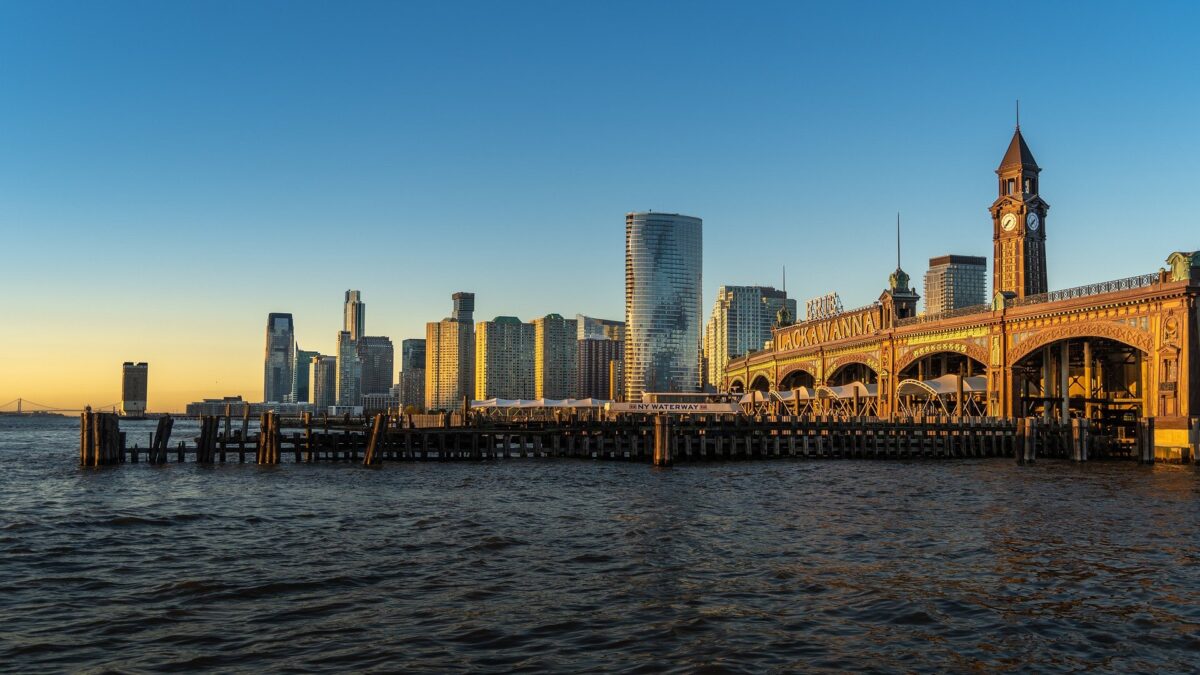
Moving To Hoboken, New Jersey – The Complete Guide

Located less than 5 miles away from Manhattan via the PATH train, Hoboken is one of the most sought-after neighborhoods in New Jersey despite being only two square miles. Still, the bustling city offers plenty of restaurants, bars, and beautiful city views. What’s not to love? Not only does the city offer great amenities, but it also houses Stevens Institute of Technology, one of the best engineering schools in the country. All of these reasons are why Hoboken is considered one of the best places to live in New Jersey.

While the city is home to a lot of college students, it’s also a great place for families and professionals. If you’re considering moving to Hoboken and wondering if it’s the right fit for you, keep reading to get all the details on what it’s like to live in Hoboken.

Important Things to Know About Hoboken

Easy Access to New York City and the Rest of NJ

Since Hoboken is so close to New York City, you have a number of public transportation options. The most popular is the PATH train, which takes you to several different stops in New York City, including the World Trade Center, the West Village, and 33rd Street in Midtown. Of course, you can take it to other parts of including Jersey City and Newark of New Jersey. In addition to the PATH, Hoboken also has the Hudson-Bergen Light Rail that can take you to Jersey City, Bayonne, North Bergen, and Union City.

If you’re not a train person, Hoboken offers other options, such as water ferries that take you to downtown or midtown Manhattan. There are also plenty of buses that can shuttle you to different areas in New Jersey.

Hoboken: A Great City for Foodies

Hoboken may be small, but that doesn’t mean it skimps out on its restaurants. They have some truly delectable food options, from Cuban to pizza to deli sandwiches. If you’re looking for some pastries, the famous Carlo’s Bake Shop has been in operation since 1910, serving up some of the best cannolis in the area. You can also take classes with the expert and learn how to level up your cupcakes. The classes last about two hours, and you, of course, get to eat the cupcake after you are done.

The Birthplace of Baseball

Nope, you read that right. Hoboken, New Jersey, is home to Elysian Fields, which is believed to be the site of the first organized baseball game. Back in 1845, the Knickerbocker Club of New York City used Elysian Fields to play baseball due to the lack of grounds in New York City (even back then, NYC didn’t have enough space). On June 19, 1846, the Knickerbockers played the New York Nine on the field in the first officially recorded, organized game between the two clubs.

The field is still in service and has been converted to a neighborhood park where you can play basketball, walk your dog, or just hang out. While there’s no longer a baseball diamond, there is a baseball monument commemorating the history of the former baseball field.

Where to Live in Hoboken, New Jersey

Hoboken isn’t a big city, so there aren’t any set neighborhoods that have names. With that said, as you walk through the city, you will notice how the vibe changes from street to street. In general, there are two ‘locations’ to take note of: uptown and downtown.


Flood Risk Awareness in the Hoboken Area

Hoboken Area Flood Risk Level Elevation (Approx.) Flood History Primary Risk Factors Renter Awareness Tip
Southwest Hoboken High Low (Near Sea Level) Frequent during heavy rain & storms Low elevation, poor drainage Avoid ground-floor units
Downtown (Near PATH) Moderate–High Low–Moderate Occasional street flooding Storm surge, runoff Check building flood defenses
Midtown Hoboken Moderate Moderate Rare but possible Localized drainage issues Ask the landlord about past incidents
Uptown Hoboken Low–Moderate Higher Elevation Minimal flooding reported Runoff during severe storms Generally safer choice
Waterfront Areas Moderate Low Storm surge risk Hudson River proximity Verify flood insurance coverage
Overall Hoboken Area-Dependent Varies Improving post-Sandy Heavy rain & coastal storms Review flood maps before renting


If you ask Hoboken locals, they’ll tell you that the northern part of the city is where the rich people live. For example, New York Giants quarterback Eli Manning had a condo in the area. As you get closer to the Hudson, you’ll notice rents spike as you’ll be getting great views of the water and Manhattan. This area is great if you want some peace and quiet, though, as there aren’t as many bars or restaurants. They do have some amenities, such as a Trader Joe’s, a movie theater, a new beer garden, and restaurants if you walk away from the Hudson.

If you want to be closer to the action, then you’ll want to stay closer to the train station. This is where all the restaurants, cafes, and bars are. It’s no surprise that most of the entertainment remains centered around this area, as it is close to the university, and it is where commuters will arrive after a long day of work!

Outstanding Schools in Hoboken

Despite its small size, Hoboken is actually home to eight public schools and six private schools. There are four public elementary schools, three pre-k options, and one middle school and high school. Of course, it is also home to Stevens Institute of Technology, so technically your child can stay in Hoboken from pre-k until their Master’s!

Of course, it’s not the quantity of the schools that matters, but the quality. Luckily, Hoboken has one of the highest concentrations of top-ranked public schools in New Jersey, including the Salvatore R. Calabro and Wallace Elementary School. The middle school and high school also offer a wide range of after-school activities, including student athletics, theater, and music.

Jobs in Hoboken

While there aren’t a ton of industries in Hoboken proper, you’re so close to Manhattan that you can easily find plenty of opportunities outside of the area. The median income for a household in the city is $136,402, and the unemployment rate is 2.1 percent vs 3.9 percent countrywide.

Although NYC might be a stone’s throw away, if you don’t want to commute, there are some options available. Stevens Institute of Technology is the biggest contributor to Hoboken’s economy, contributing around $117 million. If you’re into the publishing sector, the city is also the headquarters of publisher John Wiley & Sons. Of course, Hoboken has its own city government, so if you want to work for the government, there are plenty of options available, from working on the city council to being a liaison to the officials.

In addition, Hoboken has plenty of small businesses to choose from. In fact, there are over 180 small businesses in the area, though the majority fall into the hospitality industry. Though several businesses shuttered their doors permanently in 2020-2021 due to the pandemic, more than 40 new businesses opened in 2021, including a doggy daycare, chiropractor’s office, physical therapy office, some tasty restaurants, and more.

Cost of Living in Hoboken

With all of the amenities and its proximity to New York City, it should come as no surprise that Hoboken is one of the most sought-after neighborhoods in NJ, and the cost of living reflects that. When compared to the national average, Hoboken is more expensive in almost every single category except health. Everything else, from utilities to groceries, is significantly higher, earning Hoboken a 175.3 on the cost of living index in contrast to the average of 100. Houses are especially expensive, being almost 300 percent higher than the average. You’d be hard-pressed to find an apartment for sale for under $300,000.

Property taxes are similarly high, with most people paying around $8,300 a year. There aren’t a lot of houses available on the market, and the ones you do find will cost upwards of $1 million. So, unless you have a great job and/or savings, you’ll probably fall squarely into the renter category.


Hoboken Cost of Living: Monthly Expense Breakdown

Expense Category Estimated Monthly Cost Notes
Rent – 1 Bedroom $1,900 – $2,200 Higher near waterfront and PATH stations
Rent – 2 Bedroom $2,300 – $2,700 Prices rise for newer buildings and views
Utilities $140 – $200 Electric, gas, water, trash (seasonal)
Internet $70 – $100 High-speed cable or fiber plans
Groceries $350 – $500 Single professional or couple estimate
Dining Out (Avg Meal) $18 – $30 Casual dining (upscale costs more)
Transportation $110 – $160 PATH, bus, or light rail usage
Total Estimated Monthly Cost $2,800 – $3,600+ Excludes parking, childcare, entertainment


Still, the majority of people who live in Hoboken are renters. At first glance, it might seem more expensive than New York City, but you do get more space for what you’re paying. A one-bedroom is a true one-bedroom complete with an eat-in kitchen, living room, and bedroom. The median rental price for a one-bedroom is $1,980, and a 2-bedroom is $2,360. You can find more affordable options if you look around a bit and don’t mind a bit of a walk to the PATH train. In general, the closer you get to the water, the higher the rent. With that said, apartments are getting more expensive every year as people flee NYC for cheaper pastures (and lower taxes) in New Jersey.

Safety and Crime

When it comes to safety, Hoboken is quite safe, having less violent and property crime than many other cities across the United States. This is attributed to the city’s high median income and excellent schools.

Naturally, no city is devoid of crime. The most common crime in Hoboken is property crime, namely burglary. In fact, in 2020, burglary spiked 38.3 percent, which police officers attributed to unemployment, the pandemic’s economic issues, and recidivism of previous criminals. With that said, when compared to other cities in the United States, Hoboken still remains quite safe, and crime continues to decrease.

Hoboken Demographics

How many people can live in two square miles? According to the US Census, approximately 52,677! The median age is 31.5, with the largest age bracket aged between 25-34. So if you’re a young professional looking to make some connections with similarly aged people, Hoboken is the perfect place for you! It’s also a great place for singles, as around 62.8 percent of the population is single.

Although white people are the largest bracket of Hoboken residents, coming in at around 70.6 percent, there’s still plenty of diversity, with 16.2 percent identifying as Hispanic and 9.2 percent identifying as Asian. Hoboken is also very well-educated, as 78 percent of the population has a four-year degree.

Hoboken Weather

As part of New Jersey, Hoboken has a humid subtropical climate with humid, warm summers and cold winters. During July and August, the average temperature hovers around 84 degrees. In the winter, the temperature averages around 30 degrees. Hoboken also gets around 48 inches of rain per year and 26 inches of snow per year. All the precipitation can lead to flooding in the main areas of the city. During Hurricane Sandy, the city had to deal with severe flooding issues for days. Since then, the city has created a flood prevention project to curb the damage from future storms. Even with these preventative measures, the lower-lying parts of the city still flood often during heavy rainfalls. If you plan on moving to Hoboken, NJ, you should take a look at the flood map and find apartments that are outside of the most affected areas.

Luckily, these extreme weather events are not frequent. Instead, you’re more likely to experience thunderstorms during the summer months in June, July, and August. Surprisingly, Hoboken also gets a lot of sunny days, numbering around 220 compared to the national average of 205.

One of the benefits of living in Hoboken is that you get to experience all four seasons. While you might get some bad weather, it’s always gorgeous to see the leaves changing color in the fall and the blossoms start blooming in the spring months.

Fun Things to Do in Hoboken

You don’t have to take the PATH train to have some fun! There are plenty of fun things you can do without leaving the area. Whether you’re a lover of the theater or music, there’s something for everyone. You can watch some free Shakespeare during the summer months at Frank Sinatra Park. Due to Hoboken’s large Italian population, there are also many Italian festivals, including Feast of Saint Anthony’s, Saint Ann’s Feast, and the Hoboken Italian Festival. The city also has a farmer’s market that is open every Tuesday from June through October.


Top Activities and Attractions in Hoboken

Activity Type Popular Spots Best Time to Visit Cost
Parks & Waterfront Frank Sinatra Park, Pier Walkway Spring–Fall Free
Festivals & Events Italian Festivals, Farmer’s Market Summer–Early Fall Free–Low Cost
Arts & Culture Barsky Gallery, Hoboken Historical Museum Year-Round Free–$10
Architecture & Landmarks Stevens Campus, St. Ann’s Church Daytime Free
Outdoor & Water Activities Resilience Paddle Sports, Dog Parks Late Spring–Summer Free–$40


Hoboken is also home to various cultural attractions such as the Barsky Gallery, Hoboken Historical Museum, and the Monroe Center.  If you prefer to admire architecture, you can enjoy the contemporary design of the new Stevens Institute of Technology buildings and then admire the Gothic design of the Church of Our Lady of Grace or the Baroque appearance of Saint Ann’s Church. There’s definitely something for everyone, all within walking distance from each other.

If you’re more into parks, Hoboken has several different options to choose from, and they provide different amenities. You can walk along the pier to enjoy the stunning views of Manhattan, or you can hang out at Jackson Resiliency Park to enjoy the open space. If you have dogs, there are also plenty of dog parks to choose from, so you and your pup can get some exercise and meet some new friends. If you prefer being on the water, you can go to the Resilience Paddle Sports and take classes or go on a tour along the water.

Moving to Hoboken

So, is Hoboken, NJ, a good place to live? That depends on what you’re looking for. However, the small city has plenty to offer, and its close proximity to New York City makes it a favorite place for young professionals. Hoboken has almost everything you need, from great dining, various cultural attractions, nice parks, and good schools. Hopefully, this guide provided you with a bit more insight into whether Hoboken is right for you.

If you’re looking for more information on moving to Hoboken or other places in New Jersey, reach out to us! We’re more than happy to answer any questions, and our team of professional NJ movers can help you plan your move to Hoboken.