Categories
General

Useful Strategies for Packing Your Home Library for Your Next Move

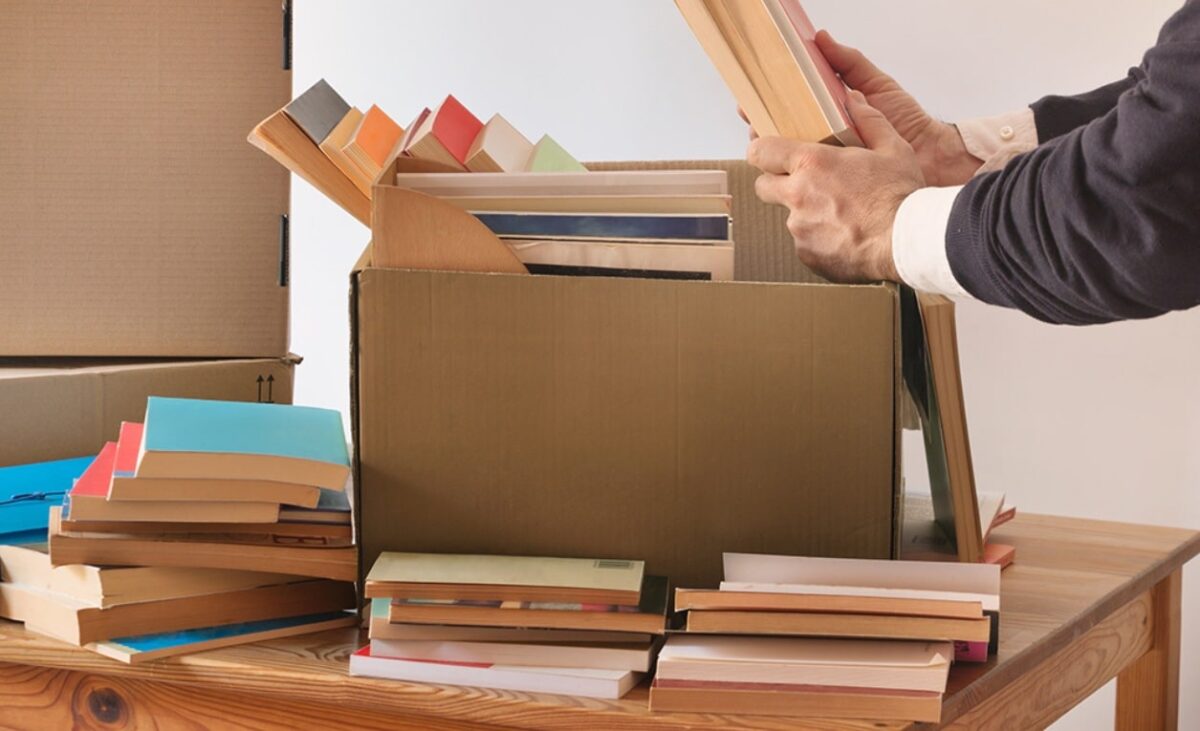
Moving books might seem simple, after all, you just toss them into a box, right? You’re not completely wrong, but there are exceptions to the rule. More importantly, if you pack your books incorrectly, it could lead to broken boxes, damaged books, and injured backs. Even if you hire professional movers to haul the boxes for you, you’ll still need to do the packing, which isn’t quite as simple as you might think. For best results, read the strategies below on how to pack and move your home library.

Declutter Your Library

If you’re a bibliophile, the thought of getting rid of some of your precious books can be heart-wrenching. However, it’s in your best interest to lighten the load. After all, the less stuff you have, the cheaper the move will be, whether you’re making a local or cross-country move. And who doesn’t want to save money?


Decluttering Value Chart

Number of Books Decluttered Estimated Resale Value ($) Donation Tax-Deduction Value ($) Weight Reduction (lbs) Moving Cost Savings ($)
10 Books $15 – $40 $5 – $15 5 – 15 lbs $3 – $8
25 Books $40 – $100 $10 – $35 12 – 35 lbs $8 – $20
50 Books $80 – $200 $20 – $75 25 – 70 lbs $15 – $45
100+ Books $150 – $400+ $40 – $150+ 50 – 150+ lbs $30 – $90+


Don’t rush this process. Try to start at least a month before your move. That way, you will have the time to consider each book carefully. Instead of throwing your books in the trash, consider the following options:

  • Donate to charity – most charities will gladly accept your books so long as they are in good condition. You can also donate directly to libraries, schools, orphanages, etc.
  • Sell them – there’s a fairly large second-hand market for books, so why not make a little extra cash from them? Offer your books at yard sales or sell them online through Amazon or through various online booksellers.
  • Pass them along to friends and/or family members – Ask people you know if they want to take some books off your hands. Chances are, there are probably a few you’re getting rid of that someone would be interested in.
  • Recycle – if your books are heavily damaged, your only option would be to recycle them. Avoid throwing your books in the trash if possible! Your old books can enjoy a new life as wrapping paper or paper bags if you recycle.

Organize Your Books the Properly Way

Once you’ve narrowed down your books, it’s time to organize them. Before you move anything, though, make sure to take a picture of your current library setup so you can replicate it in your new home. Of course, you might decide you want to try a different organization method later on!

Separate your books into hardcover and paperbacks. If you don’t, the hardcover books could damage your paperbacks. From there, group the books by size. That way, you can maximize the amount of space the books take in the box. You can go further with your organization and organize your book by genre, author, etc. Whatever is easiest for you to remember and unpack when you get to your new place. After all, there’s nothing quite like relaxing with your favorite book after a stressful moving day!

Choosing the Right Packing Materials

It might be tempting to put all of your books into one or two large boxes, but that’s ultimately an injury waiting to happen. Books are heavy. You might not think about the weight often in your day-to-day life. After all, you’re likely only holding one book at a time. An average hardcover weighs between 1 to 3 pounds, while a paperback can weigh between 0.5 to 1 pound. Even if you’re hiring professional NJ movers to help with moving, you still want to keep your boxes to a max of 30 pounds, since you might still need to move the boxes yourself from one room to another. More importantly, if you put your box full of heavy books, it can compromise the structural integrity of the box. This could lead to broken boxes and, at worst, a serious injury.

Your best bet is to choose smaller boxes. Sure, it might be tedious to pack dozens of smaller boxes, but it will ultimately be easier to move several small boxes versus one heavy box. Plus, smaller boxes mean better organization, so you’re not putting your mystery novels with your romance.

Besides the box, you want to make sure you have other packing materials such as tape, packing paper, and permanent markers. Make sure to label the packed books as heavy so the movers know what to expect.

Need to Pack Your Books Properly

Sure, you can just dump your books into boxes willy-nilly, but it will be easier for you and the movers if you are intentional with your packing. Besides organizing and getting the right materials for the job, the actual packing part can ensure your books arrive in good condition. Before you start packing, line the boxes you plan on using with packing paper. If you have delicate and/or rare books, consider packing these separately or placing cardboard sheets between the books to prevent damage.


Book Arrangement Efficiency Chart

Arrangement Method Space Efficiency (%) Packing Speed (mins/box) Box Stability Rating (1–10) Damage Risk (%)
Spine Down (Recommended) 85–95% 8–12 mins 9/10 2–5%
Stacked Flat (Same Size Books) 80–90% 10–15 mins 8/10 3–8%
Standing Upright (Like a Bookshelf) 60–75% 12–18 mins 6/10 10–18%
Mixed Orientation (Not Recommended) 50–65% 15–20 mins 4/10 20–35%
Loose-Fill / Random Placement 35–50% 5–8 mins 2/10 30–45%


When stacking your books, pack them with the spine down. If you’re stacking the books, pack the lighter books on top of the heavier ones. Try not to squeeze too much into the box. You don’t want the sides or top bulging! Leave a little space on the sides and top, and stuff the empty space with packing paper to prevent any shifting during the move. You might also want to get some desiccant to keep your books nice and dry. After all, moisture can ruin books and warp the book’s shape. Not to mention it can lead to mold and rot.

Ship Your Books Using Media Mail

If you decide to go the DIY route, you might want to consider shipping your books via media mail. That way, you don’t have to worry about lugging the heavy boxes on and off a truck! Even if you’re using professional movers, shipping the books might end up being cheaper, especially if you’re making a long-distance move. You can ship giant boxes of books for around $0.45 a pound! You can even schedule a pickup with the USPS so you don’t have to lug the boxes down to the post office.

So, what’s the catch? The USPS reserves the right to open and search the packages to ensure the contents adhere to the service’s standards. That means you can’t sneak other items into these boxes. You will need to check the media mail website to see what does count. Be forewarned that media mail packages cannot contain advertising, and things like comic books do not count. While the USPS won’t check every box, it’s better to be safe than sorry.

Move Your Home Library Safely

If you want to make sure you have your favorite books on hand when you move into your new place, then hire professional movers to relocate your home library. Reputable NJ movers have years of experience and have moved pretty much everything you can imagine. And if you need, they can put any extra boxes in storage for you. Just make sure they know you will need a storage solution ahead of time!

FAQ

Should I stack books or spine down?

Stacking books is great if you have books that are all the same size and fit into a box. Spines down ensures your pages are less likely to be damaged.

Where can I get small, sturdy boxes?

There are many places where you can get small boxes. You can contact the moving company you are using, as they will have a variety of box sizes available. You can also ask local stores that tend to receive heavy items (liquor stores, local bookstores, etc). Finally, you can check at work, though the boxes that you get from here will likely be more lightweight.

What happens if a box falls apart during a move?

Sometimes you’re just unlucky. Maybe the box got wet, or it was just too heavy. If you use professional movers, they will re-pack the books for you, but you will be charged a packing and material fee for the new box. For DIY moves, you’ll either have to put the boxes in the trunk or back seat of your car (if it fits) or find another bo,x as you don’t want loose books flying around in the back of a moving truck.


Categories
Moving Tips

Quick Survival Tips for Moving Over the Holidays

The last thing you want to do during the holidays is move house, but sometimes it’s inevitable. What should be the most wonderful time of the year quickly becomes the most stressful time of the year. While it’s not ideal, there are tips for moving you can follow to make your move easier over the holiday season.

Give Yourself Plenty of Time to Prepare

If there’s one thing you don’t want to do, it’s wait until the last minute to move. That’s true whether you’re moving during the holidays or not. However, the stress ramps up even more when you’re dealing with the holiday season. Not only do you have to worry about all the intricacies of moving, but you also have to deal with holiday events and planning.


Holiday Move Preparation Timeline

Task Recommended Start Date (Weeks Before Move) Recommended Completion Date Estimated Hours to Complete Priority Level
Decluttering 6 weeks 4 weeks 10–20 hrs High
Hiring Movers 6 weeks 5 weeks 2–5 hrs High
Packing Non-Essentials 5 weeks 2 weeks 15–25 hrs Medium
Holiday Cards (with Change of Address) 4 weeks 3 weeks 3–6 hrs Medium
School Transfers (Kids) 4–5 weeks Before holiday break 5–10 hrs High
Packing Holiday Decorations 3 weeks 1 week 2–4 hrs Low
Packing Essentials 1 week 2–3 days before move 4–8 hrs High
Utility Setup (New Home) 2 weeks 1 week 1–2 hrs High
Weather Prep (Car + Gear) 2–3 weeks 1 week 2–3 hrs Medium
Final Cleaning & Trash Removal 1 week Moving day 3–6 hrs Medium


Normally, you would want to give yourself at least a month to organize your move, but you might want to bump that up to six weeks or more. That way, you’ll have plenty of time to declutter, pack, and find professional NJ movers.

Include a Change of Address on All Your Cards

Whether you’re sending out digital or physical holiday cards, you can use the cards to serve a dual purpose by also announcing your address change. Of course, that all depends on whether you know your new address or not! If you don’t have one yet, it’s still a good idea to mention that you’ll be in a new place over the holiday season. That way, your friends and family members can wait to send out their own holiday greeting cards.

Speaking of holiday cards, make sure to let friends and family know to save the gifts until after you have moved! That way, you’ll have less stuff to move. If you do end up getting presents before then, keep everything in its original packaging until you’re in your new home.

Plan an Amazing Outdoor Gathering Before the Move

There’s no reason to skip the holidays entirely. You’ll need some time to relax and celebrate with friends and family. With that said, you might need to scale back a bit or, at the very least, reconsider the venue. It might not be possible to have your entire family over to your home since you’ll probably be in the middle of packing. Try to get someone else in your family to host for this year, and then host the next one at your new place.

Even if you don’t have a big family gathering, you should still set expectations for your partner and/or children. Let them know that you’re going to pack most of the holiday decorations and that they can pick one or two ornaments to keep out to put on the tree. Even with minimal decor, you can still make your house festive with a few simple items like a wreath, some lights, and a small tree. When packing your holiday decorations, make sure to pack them separately from the rest of your belongings and label them accordingly.

Take Advantage of Holiday Sales to Buy Moving Essentials

While there are a lot of benefits to moving during the holidays, one of the few advantages you can get is the amazing post-holiday sales. You can save quite a bit of money by scouring online and in-person at stores for some amazing deals. Sure, it might not be as fun as scoring a $50 flatscreen TV, but it’s better than spending full price on boxes and packing tape! Not all stores will have discounts on these items, so do your research ahead of time. Or, if you don’t want to deal with the lines and throngs of people, go online. You’ll have several opportunities to save money. If nothing else, there will be a lot of shipping boxes you can pick up from friends and family for free!

Ask for a Holiday Discount

Not too many move during the holiday season for a variety of reasons, so most moving companies will be more open to giving some discounts. With that said, most won’t give you one automatically. In order to get this discount, make sure to book your moving company early on and also ask for a discount. You’ll probably be able to shave off a couple of hundred dollars from the total. Plus, since there aren’t as many people moving during this time, you’ll have more freedom when it comes to choosing your move date.

Consider the Weather

Unfortunately, you can’t control the weather on moving day. If you’re relocating to or from colder parts of the US, you should be prepared for cold temperatures as well as icy roads, snow, and more. The holiday season can usher in some very dangerous weather conditions, which can make it challenging to move. While reliable movers should have experience working in a variety of weather conditions, you should take steps to protect your belongings. That means:

  • Placing electronics in weather-sealed bags and/or weather-proof plastic bins
  • Using sturdy moving boxes
  • Wrapping furniture in plastic wrap
  • Placing your mattress inside a mattress protector

Don’t forget that you need to prepare yourself for inclement weather. Make sure to wear warm clothes during the move, as well as a pair of waterproof boots and gloves. While you’re at it, winterize your car by changing to snow tires, changing your oil and antifreeze, fixing your heater, and replacing your battery if necessary. It might cost you some money upfront, but you’ll be glad you spent it once the colder weather comes.


Weather Impact on Holiday Moves

Weather Condition Risk Level Recommended Precautions Probability of Delays (%) Additional Cost Estimate ($)
Snow High Weatherproof boxes, wrap furniture, insulated clothing, check tires 35–55% $40–$120
Ice High Use salt/grit, plastic bins, winter boots, and winterize the vehicle 50–70% $60–$150
Rain Medium Waterproof covers, seal electronics, wear water-resistant clothing 20–40% $20–$75
Cold Temperatures Medium Protect electronics, use thermal blankets, gloves/boots, and a warm vehicle 10–20% $10–$50
Blizzards Very High Delay move, secure sensitive items, wear full winter gear, emergency kit 70–95% $80–$200+


And don’t forget to turn on the utilities in your new home! You don’t want to be freezing when you move, so make sure to call to get these turned on the day of your move. On the same note, turn off your utilities at your old place, so you’re not wasting any extra money.

Transfer Your Kids to a New School

If you have kids, then moving with kids during the holiday season means you’re uprooting them in the middle of the school year. Before you move, make sure all of the important documents and school records are transferred to the new school before they start. That means transcripts, report cards, immunization records, any academic testing, and other files and records. Try to get this done before the holidays, as the administration department will likely be on holiday for the last week of December. Call the new school to make sure they have received everything, and if anything else is required.

While moving in the middle of the school year isn’t ideal, there are some benefits. In many cases, the teacher might give your child more attention to make sure they’re caught up or understand the current material. If your child was struggling at their previous school, this is a great opportunity to get them up to speed. As well, it’s a fresh start for children who might not have liked the kids at their old school to make new friends.

Don’t Stress During Your Holiday Move

Which one is more stressful: moving or spending time with family during the holidays? While we can’t do anything about your family, we can make your move a lot easier! Once you’re ready to move into your new place, give us a call, and we can walk you through the process. After that, sit back and enjoy the holidays in your new home!

FAQ

Do moving companies work on holidays?

You should definitely ask the moving company you choose, but most places work 24/7!

What happens to my move if there’s a bad blizzard or ice storm?

It depends on how bad the storm is, but if you’re worried about it, call and confirm with the moving company. Unless it’s a very serious storm, chances are they will move you.

What happens if the moving truck gets in an accident?

The movers should call you directly and let you know about the accident as well as the new estimated time of arrival. If it’s a bad accident, you might have to wait another day or two for your things to arrive. When you do get your things, make sure to check that everything is there and in one piece before signing off on the bill of lading!

Categories
Moving Tips

How to Declutter Household Items Before Your Next NJ Move

If you’re planning an NJ move in the future, one of the best ways to reduce stress and save money is by paring down your belongings. After all, the less stuff you have, the less it will cost to move. Plus, if you have a lot of items that are still in good condition, you can sell them at a garage or estate sale and use that extra money to offset other moving expenses.

However, as anyone who has tried to declutter will know, it’s not an easy process. Unless you’re a dedicated minimalist, chances are you probably haven’t really considered the importance of every item you own. It’s all too easy to accumulate stuff the longer you live in one place. In fact, many people are surprised by how much they own when they do end up moving. Trying to organize and go through everything can feel overwhelming, but there are a few things you can do to make the process easier.

Start Early to Ensure You Have Enough Time

It might be obvious advice, but it’s important to have enough time so you can make thoughtful decisions when decluttering. You don’t want to accidentally throw out a family memento because you were too strapped for time, nor do you want to keep everything you own! When you start depends on the size of your home. If you’re living in a one-bedroom apartment, you might only need to start two months before your move. On the other hand, if you live in a large four-bedroom house, you might want to start six to 12 months beforehand.

Besides giving you time to sort through your belongings, decluttering your home early makes your house easier to sell, as it makes it easier for your agent to stage. Plus, you’ll have more time to do research on the items you own and their resale value. So instead of selling everything in a large garage sale, you can sell in-demand items on eBay or other platforms.

Prepare a Simple Checklist for Moving Day

People hold onto clutter for a variety of reasons, and there are a few categories most items will fall into when it comes time to declutter:

  • Old items you no longer use – these include clothes that don’t fit, books you won’t read, boxes of cords and cables you’re holding onto just in case, and so on.
  • Things you have too many of – it’s easy to accumulate small items over the years, like towels, dishes, water bottles, silverware, etc., and add them to your collection instead of replacing your old stuff
  • Stuff that is past its prime – if you haven’t fixed an item up yet, it’s a good time to get rid of it. So toss those holey socks, broken electronics, expired spices, etc.


Decluttering Checklist Category

Category Examples Avg Items Found per Room % Typically Kept % Donated/Sold % Thrown Out Priority Level
Old Items You No Longer Use Clothes that don’t fit, unused books, old cables 30–50 items 20% 50% 30% High
Things You Have Too Many Of Towels, dishes, silverware, water bottles 20–40 items 40% 35% 25% Medium
Stuff That Is Past Its Prime Broken electronics, expired spices, holey socks 10–25 items 10% 15% 75% High


Even if you start early, it doesn’t mean anything if you’re decluttering haphazardly. You should draw up a plan to help you break down this process into multiple steps. One of the best ways to separate the job is to do a single room or area once a day. Start with rooms that you use the least, such as the attic, basement, garage, or guest bedroom. Chances are you’ll have a lot of stuff stored here that you probably forgot about!

Use Up Consumables Before Moving Day

An easy way to reduce your clutter is to use up anything consumable before moving. Start this process as soon as you have decided you’re going to move, as it might take you some time to go through everything in your pantry and storage. While you’re there, check the expiration dates on things like canned food, spices, condiments, etc., and throw out any that are expired.

Consumables aren’t just limited to food items. Other things that fall into this category include:

  • Personal care items – shampoo, soap, lotion, mouthwash
  • Household products – cleaning supplies, paper products, laundry detergent
  • Reading materials – newspapers, magazines, books

Make it a goal to bring as few consumable items to your new house as possible. It will take some planning, but you’ll thank yourself when it’s time to unpack!

Follow the One-Touch Rule for Efficient Packing

If you haven’t heard of this rule, it’s simple – if you pick something up, you have to deal with it. You cannot put it back down to sort out later. So be careful what you pick up while decluttering if you’re not ready to decide whether you want to keep an item or not!

It’s easy to get sidetracked when decluttering. Maybe you hesitate on an item and put it to the side, but then you completely forget about it. While having one or two extra items might not be a big deal, it’s all too easy for this number to balloon up to a dozen or more small things. Don’t go easy on yourself! Make sure to stick to the one-touch rule no matter how big or small the item is. You might need to take some time to mull over the decision, but you’ll ultimately progress faster with decluttering by following this method.

Don’t Buy New Stuff Before the Move

This should come as a no-brainer, but you don’t want to increase the number of things you own before the move. Anything new you bring will be one more thing you’ll need to pack. Your goal is to use up as much stuff as you can! If you’re a few months out from your move and you notice you’re running out of some items, get a smaller size than you normally would. For example, buy individual rolls of toilet paper or paper towels instead of the large packs. Yes, individual items are more expensive, but do you really want to move an open pack of paper towels?

The same goes for larger items. There’s no reason to buy that chair or table right before you move. Not only are you increasing the potential cost of your move, but you also might not even like the way that item looks in your new home. Before making any kind of purchase, consider if you really need that particular item right now or if it can wait until you move. Chances are, it can probably wait.

Encourage Everyone to Get Involved

There’s no reason you should do all the decluttering yourself if you have a family. Plus, it will go a lot faster if you get some help from family when decluttering, and everyone will hopefully be a lot happier. When getting others involved, make sure to set up some ground rules. Maybe that means teaching them the one-touch rule or perhaps setting an expectation to fill at least one trash bag per room.


Family Involvement Productivity

Family Member Avg Items Decluttered/Day Avg Time Spent (Minutes) Completion Rate (%) Trash Bag(s) Filled Per Room % of Tasks Avoided Without Guidance
Adults 25–40 items 45–60 mins 85% 1.5–2 bags 10%
Teens 15–25 items 30–45 mins 70% 1–1.5 bags 30%
Kids 5–12 items 15–25 mins 55% 0.3–0.7 bags 60%


If you have very young children, you can still get them involved and have them declutter their own things. It will take time and patience. If you’re short on both, then it will be up to you to do it. Should you choose to get them involved, don’t make things too complicated. Ask them if they still play with particular toys and/or if they’re ready to let go of a few. Some children might be very possessive of their things, so it might be better to ask them to point out their favorite toys, clothes, etc.

With your partner, you should make sure that they declutter their spaces and set up the same rules. Some people are natural pack rats. If you think your partner is one, you might need to check in on them to make sure they’re actually getting rid of items. Encourage them to be honest with their assessment so they can figure out what they truly use, need, and/or love.

Go Through Everything

Decluttering isn’t a short process. It’s time-consuming, can save you money, and requires a lot of emotional and physical bandwidth. However, in order to get the most out of this process, you should go through every single item you own, from your furniture down to a pack of screws. Don’t forget to go through all your cabinets, drawers, and so on, and reassess every gadget, tool, decor, clothes, etc. Some items will be easier to decide on versus others, more sentimental ones. However, be brutal when culling! Think about how easy it will be to pack and unpack once you get to your new home.

Once you’ve pruned your belongings, sell or donate whatever is in good shape. You can host a garage sale to get rid of the majority of your items. For whatever is left, give it away to friends, family, neighbors, etc., for free. You can donate whatever is left. For items that are past their prime, throw them out. Make sure to ask your sanitation department what to do for bulky items and electronics, as there’s often a separate system.

Get Decluttering!

When moving into a new home, the last thing you want to do is bring a lot of old, dusty, and/or broken stuff with you that you’ll only have to get rid of later. Decluttering can save you money and time. In fact, it might even give you some extra pocket money when it comes to furnishing your new home. Once you’re ready, give professional NJ movers a call to reduce your stress.

FAQ

I have a lot of items to get rid of, can I rent a dumpster?

You sure can! There are private companies you can reach out to or you can ask your local sanitation department as they might be able provide some suggestions.

Should I keep my old furniture or buy new ones?

It depends on a lot of things. Is the furniture still in good condition and does it match your current decor? Also, will it physically fit in your new home?

I’m about to have a child, how do I prevent people from sending me baby items before my move?

Encourage your friends and family to hold off on getting you gifts until after you move. If you do end up with gifts, keep them wrapped and in their original boxes so you don’t have to pack anything.

Categories
General

How to Find Your Perfect Peaceful NJ Home

Maybe you’re ready to finally move out of an apartment and into your first home. Finding the perfect house for you can be a great feeling. However, it can also be fraught with problems, especially for first-time buyers. Since most people tend to live in their first home for around 5-10 years, you need to consider the time commitment and money that comes with owning a home. That means it’s important for you to take your time before making a decision.

Know Your Moving Budget

You can’t start shopping for homes until you know how much you can afford. When finding your maximum price range, determine the monthly payments you can reasonably afford on your mortgage. This number might be lower than you expect, as there are a variety of bills you need to worry about when owning a home, such as heating, water, homeowners’ insurance, taxes, HOA fees, and more.

Once you find your mortgage payment you can comfortably make on a monthly basis, work backwards from there to your purchase price. If you can’t put down the standard 20% for a down payment, you can still purchase a house; you’ll just need to pay private mortgage insurance (PMI) on top of your mortgage.


NJ Home Budget Breakdown Table

Expense Category Typical NJ Range ($) % of Monthly Income Recurring or One-Time? Notes for First-Time Buyers
Mortgage Payment $2,200 – $4,500 25% – 35% Recurring Plan for fluctuations if property taxes or insurance go up.
Property Taxes $8,500 – $14,000/yr 10% – 18% Recurring NJ has some of the highest property taxes in the U.S.—budget carefully.
Homeowners Insurance $900 – $1,800/yr 1% – 3% Recurring Rates depend heavily on home age, location, and claims history.
HOA/Condo Fees $150 – $500/mo 2% – 5% Recurring Common in condos and townhomes; may rise annually.
Utilities (Electric, Gas, Water) $250 – $450/mo 5% – 8% Recurring Older homes may have higher heating costs—ask for prior bills.
Internet & Cable $70 – $180/mo 1% – 2% Recurring Fiber available in some NJ towns—check coverage before buying.
Maintenance & Repairs $2,000 – $5,000/yr 3% – 6% Recurring Set aside 1% of home value yearly; older homes may need more.
Closing Costs $10,000 – $18,000 N/A One-Time Typically 2%–5% of purchase price; varies by lender and attorney fees.
Moving Costs $1,200 – $5,000 N/A One-Time Varies by distance and home size; NJ–NYC moves are usually local.
Furnishing & Decoration $2,500 – $15,000 N/A One-Time (mostly) Renovations can drastically raise costs—don’t underestimate.


Once you’ve found your maximum purchase price, you’ll need to connect with a lender who will then tell you whether you will be approved at your price point. This process is known as pre-approval and makes it much easier to purchase a home once you’re ready.

After that, work with a real estate agent and let them know your hard upper limit. You might need to make some concessions in terms of location, rooms, etc., if you don’t have a large budget. Just make sure you know what you’re getting beforehand.

In addition to the price of your home, make sure to set aside money for moving expenses, closing costs, and renovations if necessary.

Choose the Right Location for a Better Living Experience

Location is right up there with budget when it comes to finding a home that meets your needs. If you’re moving due to a new job, you might not have as much flexibility as those who are moving for a change of scenery. With that said, you’ll still want to be on the lookout for a good location.

What is a good location? It varies by person. For some, it might be a place with a good school district, for others it might be a good commute to work, and others might be more interested in being close to a bustling downtown area with restaurants and shops. Figure out what is most important to you when moving. Luckily, New Jersey offers plenty of options, whether you want to live in a city or a small town.

Remember that there are pros and cons to each. If you want to live near a large city like New Jersey, then you’ll end up paying a lot more than if you lived in a small town. Conversely, living in the countryside means lots of space and nature, but it also means you won’t have a lot of variety when it comes to food, entertainment, and more. It’s up to you to decide what’s important.

Prepare a Comprehensive Checklist of Essential Features You Need

Every potential home buyer has a list of things they want their dream house to have. Unfortunately, most people aren’t able to get their dream home the first time they buy a house. While having a walk-in closet, several bathrooms, and a large eat-in kitchen might be nice, is it necessary? Before you go house hunting, write down a list of absolute necessities your home should have. Not everyone has the same requirements, but some things to consider include:

  • Number of bedrooms and bathrooms – how many people are in the house currently? Are you expecting that number to increase within 5-10 years? Plan ahead!
  • Size of kitchen and appliances – look for up-to-date appliances in the new home
  • Separate dining room – while not necessary, if you entertain a lot, a separate dining room might be a good option
  • Heating and cooling system – oil, wood, etc? Also, do you need central air?
  • Water and sewage – are you okay with getting your water from a well and having your sewage go to a septic tank? Or do you prefer public water?
  • Yardage – if you have kids and/or dogs, you’ll want a place with plenty of outdoor space to run around.
  • Parking – Do you need a garage? If so, how many cars will need to fit in there? If there aren’t any homes with a driveway or garage, is there street parking?

When creating your list, make sure to consider what you’ll need in the future. Even if you don’t drive now, you might want to get a car in the future. A well and septic tank might seem okay now, but if you lose power, you won’t be able to get any water or flush the toilet, so consider this, especially if you plan on relocating to an area that gets hit by storms.

Once you’ve written up your list of must-haves, create another list of nice-to-haves. When you’ve started your search, you can then focus on homes that have extra features on top of the essentials.

Plan Your Home Decoration in Advance

Decorating your home is very personal, and you might not like what the previous homeowners had done. Think about what rooms you will use the most, should you move in, and what changes you would need to make. Focus on the walls and ceilings, windows, other accents like crown molding, floors, etc., and think about how they fit in your aesthetic.

With all that said, don’t overestimate potential. It’s all too easy to fall in love with the idea of what a room could be, but unless you already know the ins and outs of home renovation, chances are you’ll have no idea how long or how much it will cost. Even seemingly small updates can end up ballooning in cost. And if you’re thinking of renovating the kitchen, forget it. Unless you plan on just replacing the cabinets or tabletops, a kitchen renovation means you won’t be able to cook meals for months.

Finally, check every room for things like electrical outlets, windows, locks, faucets, etc. Everything might look fine at first glance, but chances are you’ll need to do a bit of finagling to get things how you want. All of these little changes and purchases add up and can end up costing you a few thousand dollars!

Hire a Professional Home Inspector Before Moving

Yes, it might cost you more money, but a good inspector can uncover reasons why you shouldn’t buy the house. It’s all too easy to cover up issues with a new coat of paint, but experienced home inspectors will be able to spot major structural issues with the foundation, condition of the roof, insulation, etc. There’s nothing worse than moving into a place that requires a full gut renovation after already spending hundreds of thousands of dollars purchasing it.


NJ Home Inspection Checklist with Potential Issues and Costs

Inspection Item Potential Issue Severity Level (1–5) Estimated Repair Cost ($) Notes for First-Time Buyers
Foundation & Structural Integrity Cracks, settling, water damage 5 $5,000 – $30,000+ Major repairs can delay move-in or require renegotiation.
Roof Leaks, damaged shingles, and aging 4 $5,000 – $15,000 Inspect age and materials; replacement can be costly and urgent.
Plumbing Leaks, old pipes, and low water pressure 3 $1,500 – $8,000 Check both main and outdoor plumbing; older pipes may need replacement.
Electrical System Outdated wiring, overloaded circuits, and missing grounding 4 $2,000 – $10,000 Safety hazard; may need immediate update for insurance approval.
HVAC / Heating & Cooling Old furnace, broken AC, poor insulation 3 $3,000 – $12,000 Energy efficiency affects monthly bills; replacement can be expensive.
Water & Sewage Well or septic issues, leaks, contamination 4 $1,500 – $10,000+ Check backup options; storm-prone areas may worsen issues.
Pest / Termite Damage Termites, rodents, and mold 3 $500 – $5,000 Can compromise structure if ignored; negotiate treatment costs.
Interior & Exterior Surfaces Water stains, cracks, paint issues, and flooring problems 2 $500 – $5,000 Mostly cosmetic; small repairs can be included in negotiation.


Before you decide to sign the contract, let the seller and real estate agent know that your contract to buy the house is contingent upon a satisfactory home inspection. Once you receive the report, you can then decide whether to buy or not. If there are only small issues, you might still be able to renegotiate the price based on how much you think it would cost to repair these problems.

If you’re in a hot housing market, the sellers might not be interested in waiting for you to receive a home inspection report. While it’s still recommended to hire a home inspector, if you really love the house, then it’s up to you to ask questions and look around. Check all the floors, walls, and ceilings for anything that might suggest problems such as water damage, termite damage, crumbling foundation, etc.

Shop Around

If you’ve never owned a home before, almost every home might seem amazing, and many real estate agents might pressure you to buy as soon as possible. However, don’t feel pressured to buy something that doesn’t suit your needs. Don’t buy a condo because it’s cheaper than a home if you hate living with dozens of other people. Sure, you might need to make some compromises, but always keep your must-have list handy so you can refer to it while you’re shopping.

At the same time, be open to continuing your search until you find a house that matches your budget and needs. It might seem impossible, especially with how quickly houses are being snatched off the market, but you’ll be thankful you took the time to look for a place that is suitable for you. In order to find the perfect place, you’ll want to use an agent. Sure, it might be tempting to do it all yourself, but an agent knows much more about real estate than you and can negotiate on your behalf.

Find Your Perfect NJ Home

House hunting can be a grueling affair, and it requires a lot of careful planning and consideration. At the same time, you don’t want to drag your feet too much, as there might be someone else who will snatch up your house.

Fortunately, the tips below can help make the home-buying process a bit smoother. And once you’ve found your new home, make sure to call NJ movers to transport your belongings to your new place.

FAQ

Is moving from NYC to NJ a local or long-distance move?

It depends on what movers you use. At Great Movers, we consider moves within the tri-state area local.

Where will the movers park at my new home?

If you have a driveway, the movers will park there. If you’re driving to your new home, make sure to arrive before the movers so you don’t block them from leaving.

Will I need to be at the destination when the movers arrive?

Either you or a designated person will need to be on-site when the movers arrive to confirm receipt of your belongings, sign off on the inventory and bill of lading, and pay the bill.